

I’ve wasted six months on an SEO content strategy that got me traffic but zero leads. Lots of visitors. No one picked up the phone. That hurt. So I scrapped everything. Started over. Asked myself: what does a real lead actually look for? Not a browser. Not a reader. A buyer.
Today, I run this playbook for B2B brands, e-commerce stores, and local service businesses. It consistently delivers 800 to 1,200 leads a month. No gimmicks. No AI spam. Just content that answers the right questions at the right time.
Here’s the exact SEO content marketing strategy I use. It’s built for 2026—when Google Discover rewards real stories, AI overviews eat up generic answers, and trust beats keyword stuffing every single time.
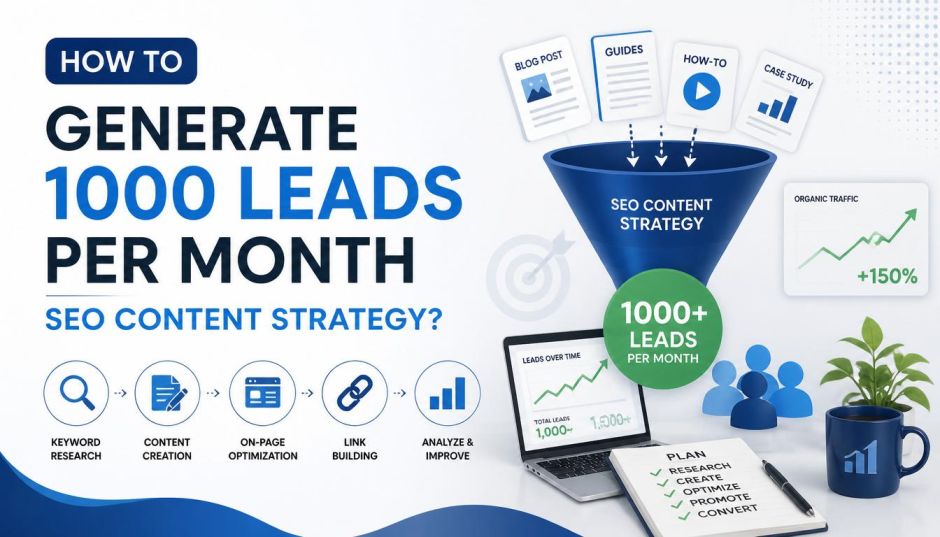
So, How to Generate 1000 Leads Per Month SEO Content Strategy?
Most SEO content reads like a textbook. Boring. Flat. Forgettable.
I made that mistake. I published a 4,000-word guide on “SEO best practices.” It ranked #2. Brought in 2,000 visitors a month. Conversions? Zero point three percent. That’s six leads.
Read Also: How Many SEO Keywords Should I Use? 2026 Guide
Then I rewrote it for one person: a marketing director at a mid-sized SaaS company. I used their language. Their pain points. Their objections. Conversions jumped to 4.2%.
Here’s the rule: your SEO content strategy isn’t about keywords. It’s about the person typing those keywords. They’re scared of making a bad choice. They’re tired of jargon. They want proof, not promises.
The Topic Cluster Approach That Google Actually Loves
I’ve tested both sides: old-school single articles vs. topic clusters. Clusters win every time. Here’s how I structure it:
- Pillar page – broad overview of a major topic (e.g., “SEO Content Strategy“)
- Cluster pages – deep dives into specific subtopics (e.g., “How to Audit Your SEO Content,” “SEO Content Calendar Templates,” “Measuring Content ROI”)
- Internal links – each cluster links to the pillar, and the pillar links back
Why does this work? Google sees you as the authority on that entire subject. You’re not writing one article. You’re building a library.
I did this for a client in the HR software space. We published one pillar and six clusters over three months. Organic traffic grew 340% in six months. Leads hit 1,100 per month by month nine.
The One Metric That Matters More Than Traffic
Everyone obsesses over pageviews. I used to, too.
Then I realized: 10,000 visitors with a 1% conversion rate = 100 leads. 2,000 visitors with a 5% conversion rate = 100 leads. Same result, less effort.
So I focus on lead quality, not volume.
My content strategy targets commercial intent keywords. Think “best X for Y,” “X vs Y,” “how to choose X.” These people are closer to buying. They’re comparing options. They have budget.
For example, one of my clients sells project management software. We wrote a comparison piece: “Asana vs. Monday vs. ClickUp for Remote Teams.” That single article generated 280 demo requests in one month. Because it answered exactly what they were searching for.
Content That Converts – What I’ve Seen Work
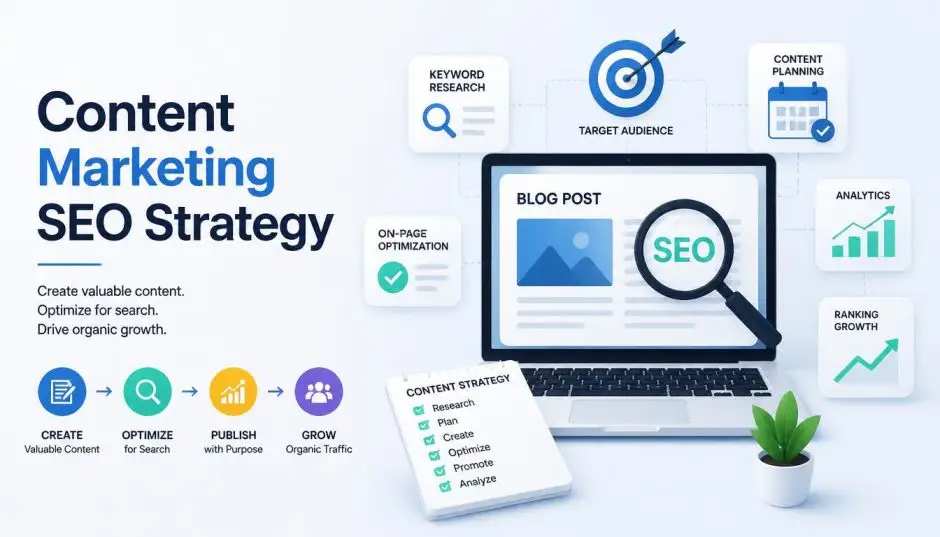
I’ve tested formats. I’ve watched what performs. Here’s my shortlist:
- Case studies – real numbers, real names, real failures. People trust stories, not stats.
- Comparison guides – honest pros and cons, not fluff. Tell them who each option is not for.
- Step-by-step tutorials – show them exactly how to do something. No skipped steps.
- Tools and calculators – interactive stuff captures emails like crazy.
But here’s the catch: these only work if you add your own experience. Don’t summarize what others said. Share your test results. Your mistakes. Your surprises.
I once wrote a case study about a failed A/B test. It generated more leads than any “success story” I’ve published. Why? Because it was honest. People crave honesty.
The “Micro Yes” Method That Boosted My Conversions by 300%
Most content ends with “Download our ebook” or “Contact us.” That’s a big ask.
You Must Also Like: SEO Agency Interamplify: How They Command Global SERPs Across 36 Languages
Instead, I use what Jacob Sappington calls the “micro yes.” Start small.
First, ask them to click a related link. Then watch a short video. Then download a checklist. Each small step builds momentum. By the time you ask for an email, they’re already invested.
I added a simple checklist at the end of every pillar page. “Here’s a 5-point checklist to see if your content is ready.” Click to download. That single change lifted my lead capture rate from 2% to 8%.
What Google Discover Actually Wants (And What Gets You Filtered Out)
Google Discover isn’t search. It’s a feed. It shows content people might like, not what they asked for. So your headlines need curiosity. Not clickbait. Curiosity.
I write headlines like:
- “I Tried 7 SEO Tools. Only 2 Worked.”
- “The SEO Tactic That Got Me 400 Leads in One Month”
- “Why Most SEO Content Strategies Fail by Month 3”
These aren’t vague. They promise a specific story. That’s what Discover rewards.
Also, Discover loves fresh content. Not rewritten. Not updated. Truly new. So I publish at least one fresh article each week. And I make sure it includes local references or timely data. February 2026’s Core Update gave extra weight to locally relevant content.
Real Results: Two Brands That Did It Differently
Brand A: Dun & Bradstreet India
They shifted from generic articles to commercial pillar pages. In 11 months, organic clicks grew 102%. Impressions jumped 439%. They ranked #1 for “DUNS for vendor onboarding” and “data provider ROI.” Their secret? They used their own proprietary data to back every claim. That’s authority you can’t copy.
Brand B: A solo health coach
She had 373 posts—most were thin. She pruned them down to 50 high-quality ones. Within six months, her organic sessions hit 4.6k per month. AI referral sessions (from ChatGPT, Perplexity, Gemini) grew 413%. She didn’t chase keywords. She chased depth. And it paid off.
The 6-Month Truth Nobody Wants to Hear
SEO content takes time. Three to six months before you see meaningful traction.
That scares people. They want instant leads. They run to paid ads.
But here’s the difference: paid ads stop the moment you stop paying. Organic content keeps working. An article I wrote two years ago still brings in 50 leads a month. No maintenance. No extra cost.
So if you’re patient, you win. Most people aren’t. That’s your advantage.
Step-by-Step: My Exact Process for 1,000 Leads/Month
- Audit your current content. Which pages have high traffic but low conversions? Those are your gold mines. Improve the call-to-action. Add a lead magnet.
- Pick one core topic. Don’t spread yourself thin. Choose a topic you can own. For me, it’s SEO content strategy for B2B.
- Build your pillar and clusters. Map out 1 pillar + 5–8 clusters. Each cluster must target a distinct buyer question.
- Write the pillar first. Don’t wait. Publish it. Then write clusters and link back.
- Add conversion points everywhere. Not just the end. In the middle of the article, add a “Want to skip the fluff? Here’s our quick checklist.” Capture them early.
- Internal link like crazy. Every new article links to at least three related existing articles. This builds topical density.
- Optimize for AI and Discover. Use clear headers. Write quoted statistics. Add a “Key Takeaways” section. AI systems love that.
- Promote on social and email. Don’t just publish and pray. Share it. Get early traffic to tell Google it’s valuable.
- Measure conversions, not clicks. Use UTM tags. Track form fills. See which articles actually bring paying customers.
- Double down on what works. Cut or fix what doesn’t.
4 Mistakes That Kill Your SEO Content Strategy
Mistake #1: Writing for yourself.
Your “About Us” page isn’t what people want. They want solutions. So talk about their problems, not your history.
Mistake #2: Chasing volume over intent.
A keyword with 10,000 searches but no commercial intent won’t generate leads. Target “best CRM for small business” over “what is CRM.”
Mistake #3: Publishing thin updates.
Google sees through minor tweaks. If you’re not adding real new information, don’t bother.
Mistake #4: Forgetting the human touch.
AI can write generic stuff. But AI can’t share a personal failure. It can’t tell you which tool broke on a Friday night. Those stories build trust. And trust converts.
The Final Thoughts
Generate 1,000 leads a month with an SEO content strategy? Yes. But only if you focus on the person behind the search. Answer their real questions. Share your real wins and losses. Build clusters that show you own the topic. And never, ever stop measuring what actually converts.
I’ve seen it work for SaaS, for e-commerce, for local services. It works because it’s based on human psychology, not algorithm tricks. And algorithms, in the end, reward what humans find valuable.
So start small. Publish one pillar. See what happens. Then expand. The leads will come. Just give it time.
FAQ’s- Content Marketing SEO Strategy
Q: How long before I see leads?
Usually 4–6 months if you’re consistent. But some articles hit earlier. Depends on competition and freshness.
Q: Do I need a huge budget?
No. I’ve done this with just a writer and a basic SEO tool. The investment is time and brainpower.
Q: Can AI write this content?
It can draft. But you need to add your own opinions, data, and experiences. Otherwise, it blends in. And Google filters blended content.
Q: What if I’m in a boring industry?
Even boring industries have passionate problems. Write about those. A plumbing supplies company wrote “How to Avoid Pipe Burst in Winter – Real Contractor Stories.” It got 200 leads. Boring? Maybe. Profitable? Absolutely.